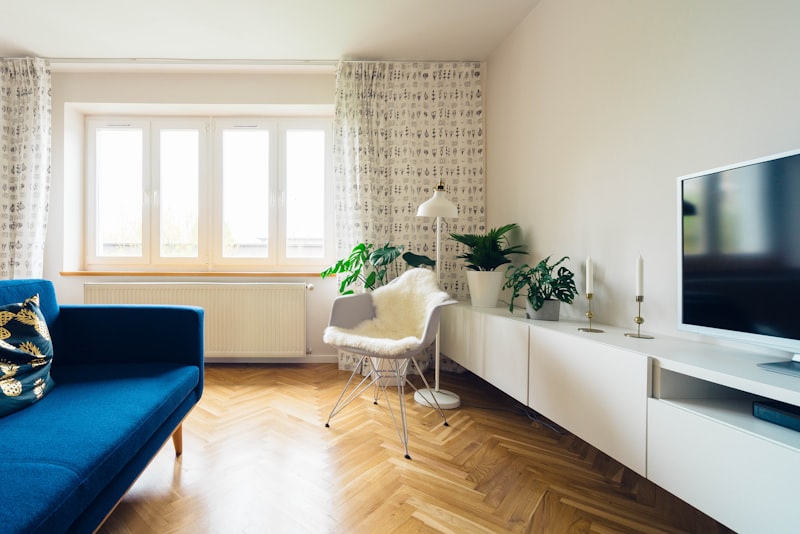
Eccentric decorating is not a style. It is a refusal. The refusal to have a home that looks like it was assembled from a mood board, furnished by an algorithm, styled for a photograph rather than a life. Eccentric home decor is the deliberate, confident, sometimes defiant choice to fill a space with things that mean something — even if what they mean is visible only to you.
Done well, it is the most personal form of decorating there is. Done badly, it is just clutter with a manifesto. Here is the difference.
Every eccentric home has at least one object whose presence defies easy justification. You own it because you couldn't not own it. It cost more than it should have. It serves no obvious function. You found it somewhere improbable — a market in Marrakech, a gallery in Tokyo, a corner of the internet at two in the morning.
This object is the anchor of your eccentric decorating. Everything else can be in conversation with it, or in deliberate contrast to it, but it should exist. It is the proof that the person who lives here has an interior life that cannot be entirely explained.
The most common failure of eccentric home decor is diffusion — a bold object here, an interesting piece there, surrounded in every direction by things chosen for their inoffensiveness. Eccentricity diluted is not eccentricity. It is just a room with a few interesting things in it.
The better approach: choose one room and commit. The dining room where every plate tells a story. The bar cart corner where everything is theatrical. The bathroom where the art is better than the living room. One room of genuine eccentric commitment reads as confidence. It makes the rest of the house more interesting by contrast.
The difference between an eccentric home and an overwhelming one is the difference between a collection and an accumulation. Collections have logic — even if that logic is visible only to the collector. An eccentric home decor collection might be organised by color, by provenance, by material, by the quality of the story attached to each piece. But it has a through-line. You can feel the intelligence behind the choices, even if you can't fully articulate it.
At Maison Bizarre, this is the principle behind every collection we curate. The objects in The Conversation Piece are not random. They share a quality — a singularity, a capacity to generate curiosity — that connects them. The objects in The After Hours are all theatrical takes on the serious business of hospitality. The eccentricity is edited. That is the difference.
Nothing kills eccentric decorating faster than consistency of era. A room furnished entirely in mid-century modern, however beautiful, is a period room. It tells you what someone knew, not who they are.
The eccentric home mixes a 200-year-old Japanese Kutani plate with a 21st-century gold-finish trombone cocktail shaker. A vintage silk scarf from a Venetian artist alongside a limited-edition Lladró collaboration. The provenance of each object is irrelevant to its relationship with its neighbours — what matters is that they are all genuinely excellent, and that you genuinely love them.
The finest eccentric home decor is not decorative in the conventional sense. It has a point of view. A plate that says something. A sculpture that asks a question. A bar cart that announces, wordlessly, that the person who assembled it has thought carefully about what pleasure looks like.
This is the Maison Bizarre test for every object we carry: does it have something to say? Does it make a room more interesting — not more beautiful, necessarily, though it might be that too — but more interesting? More like the person who lives there?
If you are beginning to build a genuinely eccentric home and don't know where to start, these are the categories that matter most:
Eccentric home decor is the opposite of safe. But safe rooms are rooms nobody remembers. The homes people talk about — the ones guests describe to other people, the ones that feel like somewhere — are the ones that took a position.
Take a position. Because ordinary is forgettable.

Minimalism had its moment. Dopamine décor is the correction — the deliberate, joyful, unapologetic return of color, personality, and feeling to the home. This is why your home should make you feel something, and how to make it happen.

She already has taste. She already has things. What she doesn’t have is something that surprised her — something chosen specifically for her, that she would never have found herself. Fifteen objects from Maison Bizarre for the woman who refuses to be ordinary.